Power outages are more than just an inconvenience; they can disrupt lives, spoil food, and even threaten safety, especially if you rely on electrically powered medical devices. Whether you're safeguarding your home against unexpected blackouts, embracing off-grid living, or simply powering adventures in the great outdoors, understanding your options is the first step in Generator Buying Guides & Selection. This guide will walk you through everything you need to know to confidently choose the best power solution for your specific needs, ensuring you're never left in the dark.
At a Glance: Your Quick Guide to Generators
- Purpose: Generators provide backup power for outages, off-grid living, or portable power for recreation.
- Types: Home Standby (permanent, automatic), Portable (movable, manual), Inverter (quiet, fuel-efficient portable), Solar (battery-based, clean, quiet).
- Sizing: Add up the wattage of essential items to determine your required output. Most homes need 5,000+ watts.
- Safety First: Always operate gas/diesel generators outdoors, at least 20 feet from your home, with CO detectors inside.
- Connection: Transfer switches (automatic or manual) are the safest way to connect a generator to your home's electrical panel.
- Fuel Options: Gasoline, Propane, Diesel, Natural Gas, and Solar each have unique benefits and drawbacks.
- Key Features: Look for automatic CO shutoff, low-oil shutoff, electric start, and appropriate noise levels.
Why You Need a Generator: More Than Just Lights
When the grid goes down, a generator can be a lifeline. Beyond keeping the lights on, they power crucial appliances like refrigerators (saving hundreds in spoiled food), sump pumps (preventing basement floods), and heating or air conditioning systems, maintaining comfort and safety. For those with medical devices like oxygen concentrators or CPAP machines, a reliable power source isn't just convenient – it's essential. Even for recreational uses like RVing, camping, or tailgating, a generator can elevate your experience, bringing the comforts of home to remote locations.
Decoding Generator Types: Which One is Right for You?
Generators come in various forms, each designed for different situations and power demands. Understanding these distinctions is key to making the right choice.
Home Standby Generators: The "Set-It-and-Forget-It" Solution
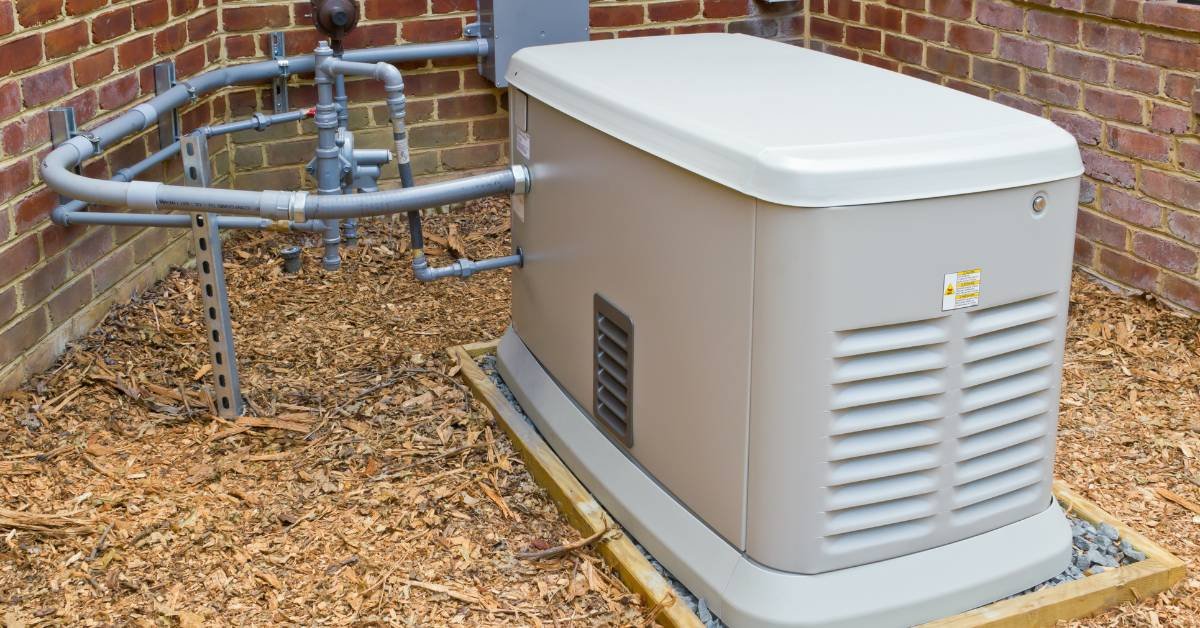
Think of home standby generators as your ultimate insurance policy against power outages. These heavy-duty, permanent devices are hardwired directly into your home's electrical system, much like an outdoor air conditioning unit.
- Operation: When the grid power fails, an automatic transfer switch (ATS) detects the outage and seamlessly kicks the generator on, usually within seconds. Once utility power is restored, the ATS switches back, and the generator shuts itself off. Many models even perform daily self-tests to ensure readiness.
- Fuel: They primarily run on natural gas, offering a virtually limitless fuel supply directly from your home's existing line, eliminating refueling worries. Propane is another common option, stored in tanks on your property, which is less risky to store than gasoline.
- Power Output: Standby generators are powerhouses, typically supplying 5,000 to 20,000 watts, with a 20kW model often sufficient to power most of a typical home's devices, including larger appliances.
- Installation & Cost: These units require professional installation by a licensed electrician to ensure proper placement (adhering to local noise ordinances and setback rules), permits, and safe wiring. Installation costs can easily match or even exceed the generator's price, ranging from $2,000 to $7,000 for the unit itself, plus several thousands for installation depending on site complexity.
Portable Generators: Your Flexible Power Partner
Portable generators are the workhorses for temporary power needs, offering versatility for various scenarios.
- Operation: These units are designed to be moved and used in open spaces. They typically power devices via extension cords plugged directly into the generator, though some can be connected to a home's electrical panel using a manual transfer switch.
- Fuel: Gasoline is the most common fuel, though dual-fuel models (gasoline/propane) offer more flexibility and cleaner burning with propane. Diesel is another option, often found in larger, industrial-grade portables, known for longer storage life and lower fire hazard.
- Power Output: Their output varies widely, usually from 3,000 to 8,500 watts, making them suitable for powering a selection of essential items rather than an entire home.
- Cost & Characteristics: Portable generators are significantly less expensive than standby units, ranging from $400 to $3,000. While they offer flexibility, larger models can be heavy and consume more fuel, requiring regular refueling during extended outages.
Inverter Generators: Quiet Power, Smart Fuel
Inverter generators are a specialized type of portable generator renowned for their efficiency and quiet operation.
- Operation: Unlike conventional portables that run at a constant engine speed, inverters throttle their engine up and down to match the power demand. This smart operation leads to highly fuel-efficient performance and significantly lower noise levels, thanks to sophisticated exhaust systems. They produce "clean" power, which is safer for sensitive electronics like laptops and smartphones.
- Fuel: Most inverter generators run on gasoline, so standard CO safety precautions are paramount.
- Power Output: Their power output can vary from small, lightweight units (e.g., 30 lbs/900 watts, perfect for camping) to larger models (250+ lbs/5,000 watts) capable of backing up more substantial home needs.
- Cost & Characteristics: Expect to pay a bit more for an inverter generator of comparable output than a standard portable, typically between $400 and $5,000. Their key advantages are much quieter operation, extended run times on a tank of fuel, and fewer emissions.
Solar Generators (Portable Power Stations): Clean Energy on the Go
Solar generators, more accurately described as portable power stations, are essentially large, rechargeable batteries.
- Operation: They store electricity and can be recharged by plugging into a standard wall outlet or, more commonly, via solar panels. With no engine, they produce zero emissions, are extremely quiet, and can be safely used indoors—a critical advantage for apartment dwellers or those who cannot safely run outdoor generators.
- Fuel: Their "fuel" is free, clean solar energy, making them environmentally friendly and energy-efficient.
- Power Output: Best suited for short-term power needs and a limited number of devices due to their finite battery capacity. Typical output ranges from 1,800 to 6,000 watts.
- Cost & Characteristics: These units generally cost between $1,500 and $4,000. While excellent for smaller demands, it's wise to have a backup plan (like a small portable generator) if continuous solar energy isn't available, especially during cloudy days or long nights.
Sizing Your Generator: How Much Power Do You Really Need?
Choosing the right size generator is perhaps the most critical decision. Too small, and you'll overload it; too large, and you'll overspend and waste fuel. Here's a simple, effective method:
Step 1: List Your Essentials
Grab a pen and paper. Think about everything you absolutely must have running during an outage. This might include:
- Refrigerator
- Sump pump
- Lights in key rooms
- WiFi router and modem
- A computer or charging station
- Medical devices
- A window air conditioner or portable heater (if essential)
Step 2: Calculate Your Wattage
Next, find the running wattage of each item on your list. This information is usually on a label on the appliance itself or in its manual. Add up these numbers.
Rough Wattage Estimates for Common Appliances:
- Refrigerator: 600 watts
- Sump pump: 750 to 1,500 watts
- Portable heater: 1,500 watts
- Window air conditioner: 1,000 watts
- Lights: 5 to 80 watts (per bulb)
- Computer: 60 to 300 watts
- WiFi router: 10-20 watts
Example: If you need to run a refrigerator (600W), a sump pump (1000W), a few lights (100W total), and your WiFi (20W), your total running wattage is 1,720 watts.
Pro Tip: Account for Starting Watts
Many appliances, especially those with motors (like refrigerators, freezers, and sump pumps), require a surge of "starting watts" that can be 2-3 times their running wattage for a brief moment. Your generator needs to handle this peak. A good rule of thumb is to take your total running wattage and add the highest starting wattage of any single appliance on your list.
For most typical homes needing emergency backup, around 5,000 watts is a common starting point for basic essentials. If you're looking for Lowes power generators, you'll find a wide range of wattages available, so calculating your needs first is crucial.
Fueling Your Generator: Understanding Your Options
The type of fuel your generator uses impacts convenience, storage, cost, and environmental footprint.
- Gasoline: The most common fuel for portable generators. It's readily available but has a relatively short shelf life (even with stabilizers) and is highly flammable, requiring careful storage. You'll need to pre-plan your supply for outages.
- Propane: A cleaner-burning fuel often used in standby generators and as a dual-fuel option for portables. Propane is safer to store than gasoline and has a longer shelf life in tanks. However, it's generally less energy-dense and can be less powerful per gallon than gasoline.
- Diesel: Popular for larger portable and industrial generators. Diesel has a much longer storage life than gasoline and a lower fire hazard. Diesel generators are often robust and fuel-efficient.
- Natural Gas: Exclusively for home standby generators, connecting directly to your home's gas line. This provides a nearly limitless and uninterrupted fuel supply, eliminating the need for refueling during extended outages. However, natural gas generators are typically less energy-efficient than propane or diesel models.
- Solar: Utilizes the sun's energy via solar panels to charge a battery bank. It's free, clean, and energy-efficient, producing zero emissions. While excellent for portability and indoor use, its availability depends on sunlight, and capacity is limited by battery size.
Essential Features for Your Generator: Beyond Basic Power
Beyond just producing power, modern generators offer features that enhance safety, ease of use, and reliability.
Safety First: CO Shutoff & Low-CO Engines
Carbon monoxide (CO) is an odorless, colorless, and lethal gas produced by gasoline or diesel engines. This makes safety features paramount.
- Automatic CO Shutoff: A critical feature (often mandatory on newer portable models) that automatically powers down the unit if dangerous CO levels are detected. Look for certifications like ANSI/UL2201 or ANSI/PGMA G300.
- Low-CO Engine: These engines are specifically designed to produce significantly less carbon monoxide, adding an extra layer of safety.
Ease of Use: Electric Start & Fuel Gauges
- Electric Start: A push-button or remote start mechanism replaces the often-strenuous pull cord, making portable generators much easier to start. Note that the battery may be sold separately (around $50).
- Fuel Gauge: Allows for easy monitoring of fuel levels, so you know exactly when it's time to refuel, preventing unexpected shutdowns.
Protecting Your Investment: Low-Oil Shutoff
This feature automatically shuts off the generator if the oil level drops below a safe minimum, preventing severe engine damage. It's a must-have for extending the life of your generator.
Neighborly Power: Noise Levels
Generators can be noisy. Quieter models (like inverters) typically operate at 50-60 decibels (like a normal conversation), while louder standard portables can reach 90-100 decibels (like a lawnmower). Consider your neighbors and your own comfort when choosing.
Connectivity: Outlets & Consoles
- Multiple Outlets: Having four or more outlets on a portable generator allows you to spread the electrical load across multiple devices without needing power strips, reducing the risk of overloading.
- Removable Console: Some portable generators offer a detachable console that can be brought indoors, allowing you to plug appliances in without running multiple extension cords outside.
The Critical Connection: Transfer Switches & Safe Power Delivery
Connecting a generator directly to your home's circuit panel isn't just convenient—it's essential for safety and efficiency. This is where transfer switches come in.
A transfer switch safely connects your generator to your home's electrical system via a single cable, allowing you to switch between utility grid power and generator power. This is far safer and more convenient than running multiple extension cords, which can overload circuits and pose fire hazards. It also allows you to power hardwired essentials like overhead lights, well pumps, and water heaters.
Automatic vs. Manual: What's the Difference?
- Automatic Transfer Switches (ATS): Standard with home standby generators, these detect power outages and automatically switch your home's power source from the grid to the generator, then back again when utility power returns. You literally don't have to lift a finger.
- Manual Transfer Switches (MTS): With a portable generator, an MTS requires you to manually flip switches at your electrical panel to isolate your home from the grid and connect to the generator.
The Interlock Kit: A Smart Alternative
An interlock kit is a less expensive option ($100-$200 less than a manual transfer switch, with faster installation) that achieves a similar safety goal. It's a mechanical device installed in your existing electrical panel that physically prevents the main utility breaker and the generator breaker from being on at the same time. This ensures you can't accidentally back-feed power into the grid, which is incredibly dangerous for utility workers and can damage electronics when grid power is restored. It allows your generator to power your home’s entire circuit breaker panel, selectively choosing which circuits to activate.
Why Professional Installation is Non-Negotiable
Whether you opt for a transfer switch or an interlock kit, professional installation by a licensed electrician is highly recommended (costs around $500 to $900 for an MTS installation). An electrician ensures everything is installed correctly, safely, and up to code. They can also help you identify and label the essential circuits for your critical outlets and appliances, making sure these are the ones connected to your transfer switch. Most transfer switches require a 220-volt input, meaning your generator should be 5,000 watts or more to utilize this effectively.
Generator Safety: Rules to Live By (Literally)
Generator safety is non-negotiable. Ignoring these rules can have deadly consequences.
The Golden Rule: Outdoor Use Only
Never, under any circumstances, operate a gas or diesel generator inside your home, garage, basement, crawl space, or any other enclosed or partially enclosed area. This is because generators produce carbon monoxide (CO), an invisible, odorless, and lethal gas.
Distance Matters
Run your generator at least 20 feet away from your home, as well as from any intake vents, windows, doors, and other structures (like an AC condenser unit or your neighbor's home). Always direct the exhaust away from any buildings.
Carbon Monoxide: The Silent Killer
Even with proper outdoor placement, CO can still drift indoors. Ensure your residence has working carbon monoxide detectors on every level and near sleeping areas. Test them regularly, even if your generator has an automatic CO shutoff feature.
Fuel Smart, Store Safe
- Stabilize Fuel: If storing gasoline for extended periods, use a fuel stabilizer to prevent it from degrading, which can clog carburetors and create a fire hazard.
- Refuel Safely: Never refuel a hot generator or one near warm objects. Always allow it to cool down first.
- Fresh Supply: Keep a supply of fresh gasoline on hand, but be mindful of its shelf life and store it in approved containers in a well-ventilated area away from living spaces and heat sources. Outages can quickly deplete local fuel supplies.
Weathering the Storm
Generators are electrical devices, so they must be kept dry. If it's raining or snowing, shield your generator with a canopy or cover specifically designed for your model to prevent electrical hazards. Ensure adequate ventilation even with a cover.
Navigating the Brands: A Quick Look
The generator market is robust, with many reputable manufacturers. While specific recommendations depend on your needs, here are some leading brands you'll encounter:
- Briggs & Stratton: A long-standing name, offering a range of portable, inverter, and home standby generators. They also supply engines to other brands.
- Champion: Known for producing all types of generators, from budget-friendly portables to large standby units, offering good value.
- Generac: One of the largest U.S. manufacturers, specializing in a full range from portable to their highly popular home standby generators.
- Honda: Revered for high-quality, reliable, and relatively quiet portable and inverter generators, often sold through dealerships. They typically come at a higher price point.
- Ryobi: A tool brand available exclusively at Home Depot, notable for being early adopters of low-CO engines in their inverter and portable models.
- DeWalt: Focuses on robust, gas-powered portable and inverter generators, often favored by contractors and available at Home Depot.
Your Next Steps: Making an Informed Decision
Choosing the right generator isn't a small decision, but by following this guide, you now have the knowledge to make an informed choice.
- Re-evaluate Your Needs: With the different types in mind, re-list your absolute essentials and calculate their wattage carefully.
- Consider Your Scenario: Are you preparing for home outages (standby, transfer switch), needing portable power for recreation (portable, inverter), or seeking clean indoor power (solar)?
- Factor in Fuel: Which fuel type is most practical for you to store and acquire during an emergency?
- Prioritize Safety Features: Don't compromise on CO shutoff, low-oil shutoff, and proper installation.
- Budget Accordingly: Remember to account for not just the generator's cost, but also fuel, accessories (like covers or extension cords), and professional installation if required.
A reliable power solution offers more than just electricity; it provides peace of mind. Invest wisely, prioritize safety, and you'll be well-prepared for whatever comes your way.