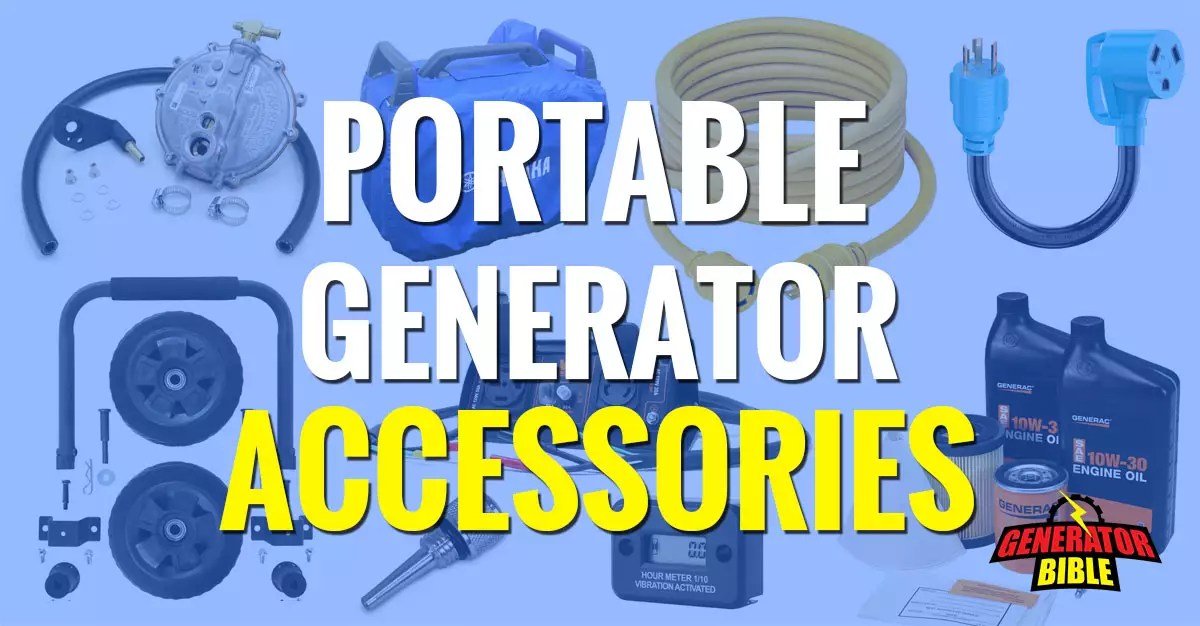
You've invested in a generator—a lifeline when the power grid falters, a reliable workhorse for remote projects, or the silent hero of your RV adventures. But owning a generator isn't just about the machine itself. To truly unlock its potential, ensure its longevity, and most importantly, operate it safely, you need the right Generator Accessories & Essential Supplies. Think of them as the supporting cast that elevates your generator from a simple piece of equipment to a truly indispensable asset.
Without the proper gear, your generator might be difficult to move, unable to connect to your most critical appliances, or even pose a safety hazard. This comprehensive guide cuts through the clutter, detailing the accessories and supplies that every generator owner should consider, from basic maintenance items to specialized kits for extreme conditions.
At a Glance: Your Generator Accessories Checklist
- Official vs. Third-Party: Stick to manufacturer-recommended accessories to maintain warranty and ensure compatibility.
- Mobility: Wheel kits are essential for heavy units; lifting kits for vertical transport.
- Connectivity: Heavy-duty extension cords (10-12 gauge) and appropriate adapters are non-negotiable.
- Monitoring: Hour meters track maintenance; clamp meters monitor output.
- Home Backup: A transfer switch is legally required and critical for safely powering your home.
- Fueling: Fuel stabilizers are a must for preserving fuel; extended run tanks can boost runtime.
- Protection: Covers shield your generator from dust and weather, including specialized storm covers for operation.
- Maintenance: Magnetic oil dipsticks and basic maintenance kits keep your generator running smoothly.
- Extreme Conditions: Consider cold weather or altitude kits if operating in specific environments.
- Critical Warning: NEVER use exhaust extensions or fuel conversion kits. ALWAYS operate generators outdoors, at least 20 feet from your home.
The Foundation: Why Accessories Matter (and a Word on Third-Party Gear)
A generator, on its own, is a powerful machine. But its true utility, safety, and lifespan are profoundly influenced by the accessories you pair with it. Imagine buying a high-performance car but skipping the oil changes or using the wrong fuel—it simply won't perform as intended or last as long. Generator accessories are no different; they're vital for everything from safe operation and easy transport to routine maintenance and extending runtime.
Now, a crucial word of caution: when it comes to accessories, official is almost always optimal. Your portable generator's manufacturer designs and tests specific accessories to work seamlessly with their machines. These official accessories fit perfectly, perform optimally, and, critically, do not void your warranty. Using third-party accessories, especially those involving modifications to the generator's hardware, introduces risks—compatibility issues, unverified safety standards, potential performance degradation, and a high likelihood of voiding your warranty. Proceed with third-party options at your own risk, and always prioritize manufacturer-approved choices first.
Getting Your Generator Where It Needs to Be: Mobility Solutions
Generators, especially the more powerful ones, can be incredibly heavy. Moving them from storage to their operating location shouldn't feel like a weightlifting competition. Mobility accessories are your back-savers.
Wheel Kits: Rolling with Ease
Most generators over 110 pounds will likely include a wheel kit. If yours doesn't, or if you're upgrading an older model, a quality wheel kit is a game-changer. These kits typically consist of two to four wheels and a foldable handle, transforming your static power plant into a portable one. This is highly recommended if you struggle to move your generator even a short distance. Expect to pay between $30 and $150.
Lifting Kits & Hanger Kits: Vertical Mobility
For heavier, industrial-grade generators, or those that need to be hoisted onto a truck bed or elevated platform, lifting or hanger kits come into play. These usually involve sturdy steel bars that bolt onto the generator's frame, providing secure points for heavy lifting equipment. While often included with larger units, you can purchase them separately for $20-$50. They're indispensable for serious vertical transport needs.
Connecting the Dots: Powering Your World Safely
Once your generator is in place, the next step is connecting it to the devices or systems that need power. This is where proper cords and adapters become paramount, ensuring both functionality and safety.
Adapters: Bridging the Power Gap
Not all outlets are created equal, and your generator's outlets might not match every device or panel you want to power. That's where adapters come in. They allow you to convert one type of plug to another. RV adapters, for instance, are very common, converting generator outlets like an L5-30P to a TT-30R, or an L14-30P to a 14-50R.
You'll find them in "linear" (straight) or "dog bone" (bent) configurations. Always ensure the adapter's amperage rating matches or exceeds what you'll be drawing. A good quality adapter will cost around $20.
Heavy-Duty Extension Cords: The Lifeline
Absolutely essential. Your generator must always operate outdoors in a well-ventilated area, at least 20 feet from your home, windows, and doors, to prevent deadly carbon monoxide buildup. This means you’ll almost certainly need an extension cord to bring power inside or to your devices.
For portable generators, invest in heavy-duty extension cords. Look for 10- to 12-gauge cords; the lower the gauge number, the thicker and more robust the wire, and the better it can handle higher wattage without overheating. Available in lengths from 2 to 100 feet, choose a cord that allows your generator to maintain that critical 20-foot distance. This is a mandatory accessory, costing anywhere from $50 to $200, depending on length and quality. Do not skimp here—cheap, flimsy cords are a fire hazard.
Bonding Plugs: For Advanced Users (Floating Neutral Explained)
This is a niche accessory for specific generator setups. Some generators have a "floating neutral" design, meaning the neutral and ground wires are not connected within the generator. While perfectly safe, some ground fault circuit interrupters (GFCIs) or surge protectors might interpret this as an "open ground" condition and refuse to function. A bonding plug (or neutral-ground bonding plug) creates that neutral-to-ground bond, resolving the issue.
Unless you're experiencing "open ground" errors with your floating neutral generator and understand electrical principles, you likely won't need one. If you do, they cost under $20.
Maximizing Your Power Potential: Efficiency & Flexibility
Beyond basic connectivity, some accessories allow you to optimize your generator's output or combine its power with another unit.
Parallel Kits: Doubling Down on Inverter Power
Own two compatible inverter generators? A parallel kit lets you run them in tandem, combining their power output to handle a larger load. This offers incredible flexibility: use one generator for lighter tasks, or link them up for maximum power when needed.
These kits typically consist of a cable or a small box with two inlets for your generators and one larger outlet for your load. Remember, the combined output is limited by the kit's upper power rating, not necessarily just the sum of the two generators. Always use a first-party parallel kit if available, as compatibility is crucial. They are rarely included with generators and cost $50-$100.
Keeping an Eye on Performance: Essential Metering
Your generator is working hard, but how hard? Monitoring its output and runtime is crucial for efficient use and timely maintenance. While many modern generators have built-in data centers, older or simpler models might not.
Clamp Meters (Voltmeters, Current Testers)
A multimeter, specifically a clamp meter, is an invaluable tool. It allows you to safely measure AC current, voltage, and sometimes wattage at various points in your circuit without breaking the connection. This helps you understand how much power your generator is actually putting out and how much your connected tools or appliances are drawing (both starting and running watts).
This knowledge is critical for preventing overloads and sizing your generator correctly. Even if your generator has a data center, a clamp meter offers independent verification and the ability to test individual loads. Highly recommended, typically around $50.
Vibration-Activated Hour Meters
Maintenance schedules are often tied to runtime hours (e.g., "change oil every 50 hours"). A vibration-activated hour meter does exactly what it sounds like: it detects the generator running via vibrations and logs the operating time. This simple device takes the guesswork out of maintenance scheduling, ensuring you change oil, spark plugs, and filters when needed.
If your generator doesn't have a built-in runtime tracker, this is a must-have. They're inexpensive, usually around $15.
Integrating with Your Home: The Transfer Switch Imperative
If you plan to use your portable generator to power essential circuits in your home during an outage, a transfer switch isn't just an accessory—it's a legal and safety requirement.
Understanding Manual vs. Automatic (ATS) for Portable Generators
A transfer switch connects your generator to your home's electrical panel, allowing you to safely switch between utility power and generator power.
- Manual Transfer Switches: These require you to physically flip switches to disconnect from the utility grid and connect to your generator. You manually start the generator and then engage the switch.
- Automatic Transfer Switches (ATS): An ATS detects a power outage, automatically disconnects from the utility, starts your generator (if it's an auto-start model), and then connects generator power to your home. However, most portable generators don't support automatic startup, making an ATS less effective for them. You'll likely still need to manually start your portable generator, even with an ATS.
The Safety and Legal Must-Have
The primary function of a transfer switch is to prevent "backfeeding." Backfeeding occurs when generator power flows back into the utility grid, posing an extreme, life-threatening danger to utility workers who might be repairing lines, unaware they are still energized. Backfeeding is illegal, dangerous, and can also damage your generator or home electrical system.
Considered home electrical equipment rather than a generator accessory per se, a transfer switch is absolutely mandatory for safety and convenience if you intend to power your home with a portable generator. A basic 30-amp manual transfer switch starts at a few hundred dollars, plus installation costs.
Fueling Longer Runs: Extended Fuel Systems
Running out of fuel in the middle of a storm is frustrating. Extended-run fuel tanks increase your generator's fuel capacity, allowing it to operate for significantly longer periods without needing a refill.
Gravity-Fed Systems: Simple & Effective
The most common and safest type of extended fuel system is gravity-fed. These consist of an external fuel tank that you mount higher than your generator. A hose then runs from the external tank to a modified fuel cap on your generator's original tank, continuously refilling it as fuel is consumed.
This simple design avoids modifying the generator's fuel lines, which is crucial for maintaining your warranty and emission ratings. Prices typically start at $100, including the tank, hose, and modified fuel cap.
Advanced Pump Systems: A Word of Caution
Some systems feature their own fuel pumps and can bypass the generator's original fuel tank entirely. While offering potentially greater flexibility, these are generally not recommended by manufacturers. They often require modifications to the generator's fuel lines, which can void your warranty, affect emission certifications, and potentially introduce new points of failure. Stick to gravity-fed systems for reliability and warranty preservation.
The Lifespan Boosters: Maintenance Essentials
Generators are internal combustion engines, and like any engine, they require regular maintenance to perform optimally and last for years. Having the right supplies on hand makes this easy.
Fuel Stabilizers: Your Generator's Best Friend
Unless you meticulously drain your generator's carburetor and gas tank after every single use (which most people don't), fuel stabilizer is a must-have. Modern gasoline, especially ethanol-blended fuel, can degrade rapidly, forming gummy deposits that clog carburetors and fuel lines. This is a common cause of "no-start" issues after a generator has sat unused for a while.
A good fuel stabilizer prevents this degradation, protecting your carburetor and extending your generator's life. Always add it to your fuel tank before storing the generator for any period longer than a few weeks. Highly recommended, inexpensive, and readily available.
Magnetic Oil Dipsticks: Trapping Engine Wear
Small engines, like those in many portable generators, often lack oil filters. This means tiny metal shavings, naturally produced from engine wear, can circulate in the oil, accelerating further wear. A magnetic oil dipstick replaces your standard dipstick with one that has a powerful magnet on the end.
This magnet captures those metallic particles, allowing you to remove them manually each time you check your oil. It's a simple, inexpensive ($15-$20) upgrade that can significantly prolong your engine's life. Just ensure you get the correct thread size for your generator.
Maintenance Kits: Convenience vs. Customization
Many manufacturers offer all-in-one maintenance kits containing essentials like oil, air filters, spark plugs, and a funnel. These are convenient, especially for first-time owners, ensuring you have the right parts.
However, they can sometimes be more expensive than buying components separately, and you might not use all items evenly (e.g., you'll replace oil more often than spark plugs). We recommend them for initial purchases, then refill individual components as needed.
Protection from the Elements: Covers for Every Scenario
Your generator works hard for you; protect it when it's not in use or even when it is. Covers shield your investment from dust, dirt, and harsh weather.
Storage Covers: Dust & Dirt Defense
A basic storage cover is essential for keeping dust, debris, and moisture out of your generator's sensitive components when it's not running. Manufacturer-specific covers often fit best, providing tailored protection. These are generally not designed for outdoor operation, so use them only when the generator is off and stored. Highly recommended for any generator, costing $10-$30.
Storm Covers (Running Covers): Powering Through Inclement Weather
If you plan to use your generator during rain, snow, or other adverse weather, a storm cover (also known as a running cover or tent) is indispensable. These are heavy-duty, weather-resistant enclosures, often with a sturdy frame, designed to allow the generator to operate safely and effectively even in wet conditions. They're built to withstand wind and channel exhaust away safely.
Brands like Champion Power Equipment and Westinghouse offer excellent options. This is highly recommended if you anticipate using your generator in bad weather. Expect to pay $150-$200 for a quality storm cover.
Conquering Challenges: Specialized Kits for Extreme Conditions
For those who operate their generators in specific, challenging environments, specialized kits can optimize performance and prevent operational issues.
Cold Weather Kits: Beating the Freeze
Operating a generator in sub-freezing temperatures can lead to issues like condensed water freezing in the crankcase breather tube, causing oil leaks or performance problems. Cold weather kits typically consist of heating coils or elements that keep critical components warm.
If you regularly operate your generator in freezing conditions, this kit is highly recommended. Components can range from $100-$300.
Altitude Kits: Breathing Easy at High Elevations
At higher altitudes (generally above 2,000 feet), the air density decreases. Without adjustment, a generator's carburetor will run too rich, leading to reduced performance, increased fuel consumption, and potentially carbon buildup. Altitude kits consist of different sized carburetor jets to adjust the fuel-air mixture, allowing your generator to perform as it would at sea level.
Operating a generator with the wrong jetting at the wrong altitude can damage the engine. If you frequently use your generator above 2,000 feet, this is recommended. Note that changing carburetor jets can sometimes void your warranty, so check with your manufacturer. These kits are typically only a few dollars.
Remote Start Kits: Power at Your Fingertips (with Caveats)
Many premium generators now come with built-in remote start features. But if you have an electric-start generator without this convenience, aftermarket remote start kits can be an option. These allow you to start your generator from a distance, which is convenient, especially in bad weather.
Several first-party manufacturers (like Honda or Yamaha) and third-party companies offer these. However, they often require significant modification to your generator's wiring, which can void your warranty and should only be undertaken by advanced users comfortable with electrical work. Given the cost ($200-$500, not including installation), consider whether upgrading to a generator with built-in remote start might be a better, safer alternative.
Crucial Warnings: Generator Modifications to AVOID
While many accessories enhance your generator, some "modifications" are outright dangerous, illegal, or detrimental to your machine. Steer clear of these.
Fuel Conversion Kits: Warranty and Safety Risks
These kits aim to allow a gasoline generator to run on other fuels like propane or natural gas. They are always from third-party manufacturers, and they will void your warranty. Beyond that, they often compromise emission regulations, can degrade performance, and may lead to long-term engine damage due to improper fuel delivery or combustion. Stick to the fuel your generator was designed for.
Silencers/Mufflers: Don't Compromise Exhaust
The idea of a quieter generator is appealing, but aftermarket silencers or mufflers often require modifications to the exhaust system. This can restrict or block exhaust flow, leading to engine damage, reduced performance, and, once again, voiding your warranty. If noise is a concern, invest in a quieter inverter generator or build a properly ventilated, soundproof enclosure.
Exhaust Extensions: The Carbon Monoxide Danger
This is perhaps the most dangerous "accessory" people consider. The motivation is usually to run the generator indoors or in a garage and simply vent the exhaust out a window or door. This is an extremely hazardous idea. Exhaust extensions are prone to leaks, blockages, and can never fully prevent carbon monoxide from entering your space.
Always operate your generator outdoors, at least 20 feet away from any structure, with the exhaust pointed away. Carbon monoxide is an odorless, colorless gas that can kill quickly and silently. Do not risk your home or your life with exhaust extensions.
Your Generator Checklist: What to Buy Now
Equipping your generator correctly isn't an afterthought—it's part of responsible ownership. By investing in the right accessories and essential supplies, you ensure your power source is always ready, safe, and efficient when you need it most.
Here’s a quick recap of the must-haves:
- Mobility: Wheel Kit (if not included)
- Connectivity: Heavy-duty (10-12 gauge) Extension Cords, relevant Adapters
- Safety: Transfer Switch (for home backup)
- Monitoring: Vibration-Activated Hour Meter, Clamp Meter
- Maintenance: Fuel Stabilizer, Magnetic Oil Dipstick
- Protection: Storage Cover, Storm Cover (if operating in weather)
Remember to always prioritize manufacturer-approved accessories and never compromise on safety. With these tools in your arsenal, you'll be well-prepared for any power challenge, getting the most out of your generator investment. For more options and to find the perfect generator for your needs, you might want to explore Lowe's power generators.